
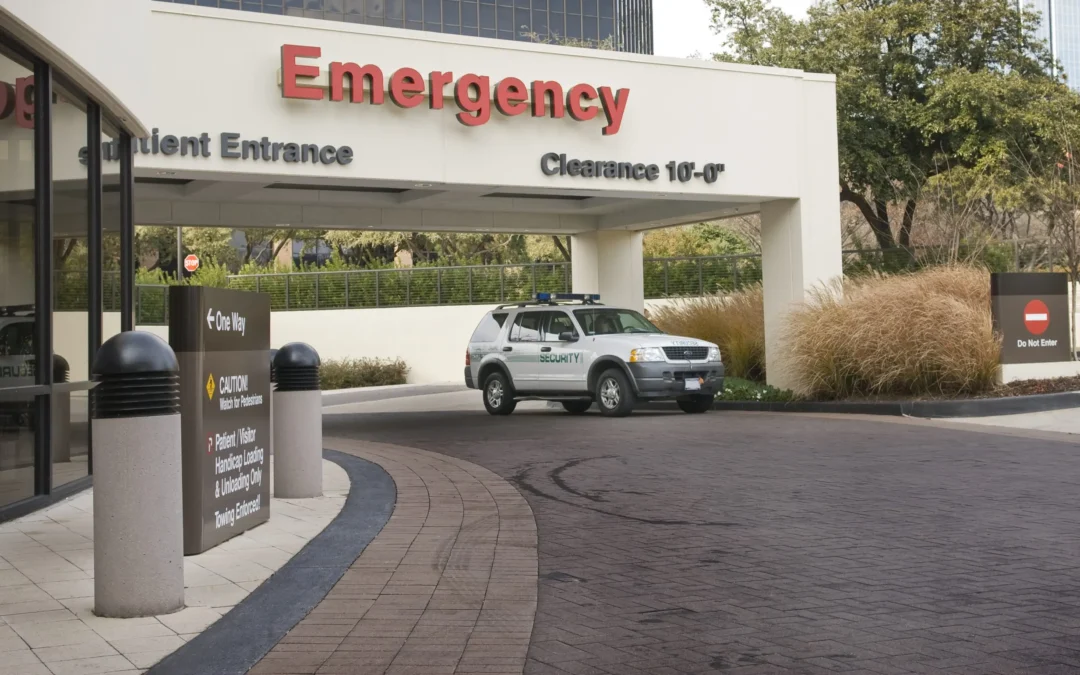
Hospitals and healthcare facilities are places of healing and hope, but they’re also some of the busiest and most vulnerable environments in any city. Every day, thousands of patients, visitors, and staff move through hospital doors. This constant activity creates opportunities for crime, disorder, and safety risks that can quickly spiral out of control without professional security measures in place.
In this article, we’ll break down the top security risks hospitals face and explain how trained security guards protect patients, staff, and property.
1. Workplace Violence Against Healthcare Workers
One of the most pressing security threats in healthcare is workplace violence. According to the National Institute for Occupational Safety and Health (NIOSH), healthcare and social assistance workers experience workplace violence at rates much higher than most other industries (CDC source).
- Patients under the influence of drugs or alcohol may become aggressive.
- Family members of patients may lash out in stressful situations.
- Long wait times in emergency rooms often escalate tensions.
How Security Guards Help:
Trained officers can de-escalate tense situations, protect staff from harm, and act as a visible deterrent to aggression. Their presence alone often discourages violence before it begins.
2. Theft of Medical Equipment and Pharmaceuticals
Hospitals store expensive medical devices, controlled substances, and confidential patient records. These items are prime targets for theft and black-market resale.
- Portable machines and electronics can be stolen quickly.
- Prescription medications, especially opioids, attract criminal interest.
- Even patient belongings are at risk when rooms are unattended.
How Security Guards Help:
Armed or unarmed guards provide round-the-clock monitoring of critical areas such as pharmacies, supply rooms, and patient wings. Patrols in parking lots also reduce break-ins and theft.
3. Unauthorized Access to Restricted Areas
Hospitals are divided into zones where access is strictly limited — think intensive care units, operating rooms, maternity wards, and medication storage areas. Unfortunately, without security, these areas are vulnerable.
Risks include:
- Trespassers entering unauthorized areas.
- Patients wandering into unsafe zones.
- Strangers attempting to gain access to sensitive records or medications.
How Security Guards Help:
Security officers stationed at key entry points enforce badge checks, visitor sign-ins, and access control systems, ensuring only authorized personnel can enter restricted spaces.
4. Parking Lot Safety & After-Hours Risks
Hospital parking lots are often sprawling, poorly lit, and active around the clock. Patients, staff, and visitors can feel unsafe walking to their cars late at night.
Common risks include:
- Vehicle theft and break-ins.
- Assaults or robberies in poorly monitored areas.
- Slip-and-fall incidents without immediate response.
How Security Guards Help:
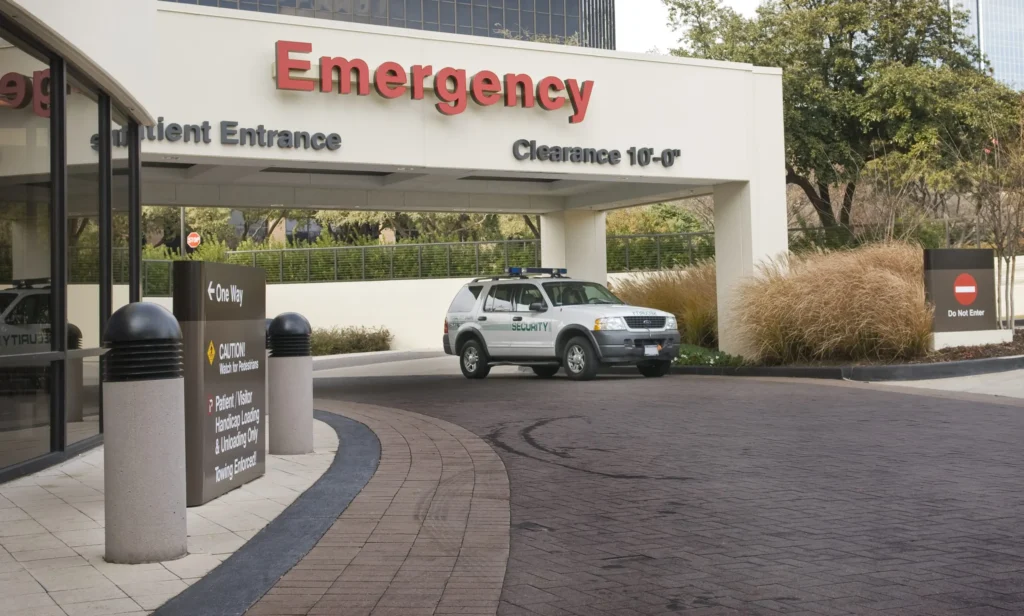
Mobile patrols and foot patrols provide a visible presence that discourages criminals. Guards can also escort staff or patients to their vehicles, ensuring safe passage after dark. Presence of a marked security vehicle acts as a deterrent.
5. Emergency Preparedness and Crisis Response
Hospitals are no strangers to emergencies, from natural disasters and fires to large-scale accidents or even active threats. Without security staff, response times may lag, putting lives at risk.
How Security Guards Help:
Security officers are trained to:
- Coordinate with law enforcement and first responders.
- Guide patients and visitors to safety.
- Assist in lockdown procedures if necessary.
Their presence ensures a faster, more organized response when every second matters to lives.
Why Professional Security in Healthcare Facilities is a Necessity, Not a Luxury
Many hospital administrators think of security as an added expense — but in reality, it’s a necessary investment in safety and trust. Without adequate security:
- Staff turnover increases due to unsafe work conditions.
- Liability risks grow from preventable incidents.
- Patients and families may lose confidence in the facility.
By contrast, professional security guards reduce risks, protect lives, and safeguard reputations.
Partnering With Shield and Spear Security Services
At Shield and Spear Security Services, we specialize in providing armed and unarmed security officers for hospitals, clinics, and healthcare facilities. Our guards are trained in:
- De-escalation techniques to prevent violence.
- Access control and visitor screening.
- Emergency response procedures tailored to healthcare settings.
- Compassionate, professional communication that supports patient care.
We understand that security in a hospital isn’t just about protection — it’s about creating a safe, welcoming environment where healing can happen.
👉 Learn more about our Hospital & Healthcare Security Services and discover how we can create a customized security plan for your facility.
Final Thoughts
Hospitals are vital to our communities, but they also face risks that can’t be ignored. From theft and unauthorized access to workplace violence and parking lot crime, the challenges are real — and the consequences of inadequate protection are severe.
Professional, trained security guards are the solution. With the right team in place, hospitals can ensure patients, staff, and visitors feel safe, secure, and supported.

